Winning Hands
There are two ways to win and two hand structures. Here's everything you need to know.
🎯 The Winning Formula
4 Sets (3 tiles each) + 1 Pair (2 tiles) = WIN!
13 tiles in hand + 1 drawn tile = 14 tiles = complete hand
Starting Hand
Each player receives 13 tilesas the starting hand, then draws & discards in turn.
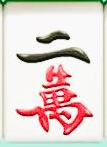
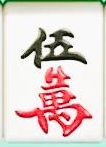
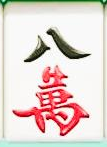
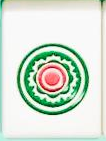
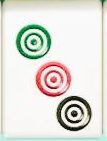
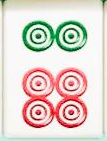
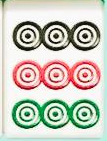
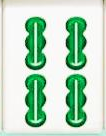
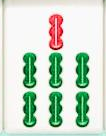
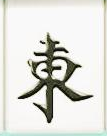
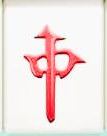
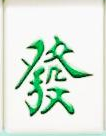
Example starting hand: 13 tiles
How to Win
Win by Discard (点炮)
Another player discards a tile that completes your hand.
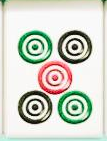 ← someone discards this → Win!
Win by Self-Draw (自摸)
You draw the winning tile from the wall yourself.
✅ All three opponents pay you double!
💰 Payout Rules — Who Pays What?
Understanding how money changes hands is essential. In Chinese Mahjong, the payout depends on who wins and how they win.
🔄 Win by Self-Draw (自摸)
You draw the winning tile yourself. All three opponents each pay you 2× the hand value.
Example: Hand value = 3×. You win by self-draw.
Each opponent pays: 3 × 2 = 6× → Total you receive: 18×
💥 Win by Discard (点炮)
Another player discards the tile you need. The discarding player pays 2× the hand value.
Example: Hand value = 3×. Player B discards your winning tile.
Player B pays: 3 × 2 = 6× → Total you receive: 6×
⚖️ Self-Draw vs Discard — Same Hand Value
Self-Draw (自摸)
18×
3 opponents × 6× each
Discard (点炮)
6×
Discarder pays 2× hand value
Same 3× hand: Self-draw = 18× (3 people × 6×). Discard = 6× (1 person pays 2×).
📋 Special Payout Rules
- • Robbing the Kong (抢杠): The robbed player pays 6× the hand value (covers all three shares).
- • Exposed Kong (明杠): Each opponent pays 1 point.
- • Concealed Kong (暗杠): Each opponent pays 2 points.
- • Direct Kong (点杠): The player who discarded the tile pays 3 points.
Hand Structures
Open Hand (副露)
You've used Pung or Kong calls. Some melds are face-up.
Concealed Hand (门清)
You haven't called any discards. All melds are from self-drawn tiles.
💎 Scores bonus points & qualifies for special hands!